
On Transience
In a word, man must create his own essence: it is in throwing himself into the world, suffering there, struggling there, that he gradually defines himself.

Perfectly lined columns of tiles dot the floor in a grey and blue pattern. A Chick-fil-A neon sign softly illuminates the dimness of the corridor, casting an unearthly, devilish hue. Soft jazz music tinkles from a speaker somewhere up above, tapping a playful, metronomic rhythm. We are neither here, nor there, nor anywhere. To be in an airport is to exist in the margins of reality; an alternate one that we rush through, in our desperate journey to transport ourselves from one world to another. It’s not a place to stay for too long, situated within the backdrop of metallic-grey walls and sterile, marbled floor tiles. But I’ll tell the story of my journey there, anyway.
The dull clatter of my keyboard fills the air as I sit on an airport bench, typing away on my laptop. Outside, planes are taxiing, taking off, and disappearing into the dark of night. As I gaze at the strips of long moving walkways lined along the glass windows, juxtaposed by the vast darkness of the tarmac outside, I feel an inexplicable longing. I want to be anywhere but here, half alive, barely conscious, surrounded by the ephemeral nature of the space outside. Where would I be in four hours? Tomorrow? Three days? It didn’t matter — the mystery was to be subsumed into my thoughts; begrudgingly, I closed my laptop. Writing couldn’t rescue me from the banality of the airport — at that moment, I was on the margins of reality, inhabiting some invisible purgatory; surrounded by people, but so very alone.
Nothing lasts forever. We are transients in the airport, transients in our lives. We drift from terminal to terminal, stopping at the gates of Suffering, Love, and Joy. We glance at our watches impatiently, waiting to board our flights to Hope, Ambition, and Desire. The trips may be temporary, but the memories we make are what endure.

Mexico City. Boarding at 4:45 local time. Now checking in all groups.
Fort Worth, Dallas. The line of people slithered in front and behind me, people methodically scanning their boarding passes and travel documents. I reached into my bag semi-consciously, eagerly thinking about the tacos I’d be sampling on the streets of Mexico. Suddenly, I stop, staggering mid-step, as my eyes focus on the space where my passport was supposed to be. I retraced my steps back to the waiting area where I’d struck up a conversation with my fellow debaters mere minutes ago. This was the last leg of our trip to the North American University Debating Championships. Everything had led up to this tournament — three months of preparation, attending regional competitions, sacrificing our evenings for weekly debate meetings. I check my bag again, this time with more urgency. I check my bag more deliberately, a third time, my hand shaking as I reach for emptiness yet again.
Seconds turn into minutes as the airport agents look at me expectantly. On the display ahead of me, the clock counts down the time before takeoff at a strangely horrifying tempo, a silent knell spelling the end of my tournament before it even began. In the back of my mind, I vaguely hear the agent sympathetically telling me to return at seven for the backup flight. With thoughts swimming through my mind, I nod half-heartedly, then take off back the way I came from — I’m running, weaving through an ocean of people, each footstep heavier than the last, my breath laboured at every turn. As I pass my fellow tourists, time seems to slow as the kaleidoscope of their expressions fills my vision.
A family visiting their relatives in Austin. An elderly couple returning to their honeymoon spot in Idaho. A pair of newlyweds rushing with childlike eagerness, to their gate — a honeymoon already booked in Cancún. Am I creating these people’s imaginary lives in front of them? They shuffle by me with a serene gracefulness, their faces devoid of hurry, moving directionlessly. It doesn’t matter where they’re going, just that they’re going somewhere.
The brief moments in which we exchange glances will never be enough for them to see the pain and anguish in my eyes, betraying my desperate plea for answers. They will never know the moments I shared with my friends, the smiles and laughter that filled the air just hours ago. I’m lost and searching for something they could never understand.
Destinations. Vacation getaways. A way back to the life before. Everyone is searching for something. We shuffle past gate after gate in airports to find a temporary antidote to the worst poison of all: the affliction of time. We are ships lost in a sea of chaos, miserably wrangling with the transience of our existence, hopelessly attempting to steer our past and future toward a better place.
I’m exhausted, out of breath, yet I keep pressing on, running as if I could outpace the impending reality of my loss. The SkyLink door opens as I arrive at Terminal A and I barrel towards the airport staff. I visit the lost and found centre, query agents at various gates, and spend hours waiting in line to talk to customer service. Yet even with their best intentions, when I desperately explain my situation to them, they turn to me, with a sad expression that betrays their helplessness. I don’t know whether to laugh or cry. I do both anyway.
After speaking with a kind customer service agent, who listens patiently as I mutter through held-back tears about my plight, we try fruitlessly to trace back the inscrutable routing of my Toronto-New York flight. Despondent, I collapse on a bench, tearing apart my bags and throwing my clothes to one side. My frantic search is to no avail, and I look up, in a final desperate plea to some higher power, hoping my passport would materialize. Only a few passengers scrolling their phones look up to marvel at the absurd scene I had created. It all feels like a dream. In the eyes of others, they’re probably convinced I am some incorporeal, fictional being. The transience of our experiences touches so few, yet so deeply.
The night falls noiselessly. I type up my first draft of this post at 2:30 am, staring out into the night sky strewn with stars and runway lights alike, listening to the soft blocked chords transition into flowing arpeggios in Debussy’s Clair de Lune. Every sentence feels like a struggle to get out, a punch to the gut as I recall the day’s events. For the first time in my life, I’m truly alone, accompanied only by the humming of the airport workers’ vacuums as they tidy the benches around me.
What happens next are the hardest scenes to recall: after alternating between sleep and consciousness, I get a call in the early morning telling me my passport was found in New York, followed by the tensest five hours of my life as I restlessly await its delivery. By some miracle, the pieces start falling into place — I don’t know how. What I can certainly remember, though, is my disbelief as I somehow board the 12:15 flight with my passport in hand, a freshly printed plane ticket that would finally free me from my twenty-hour confinement in Fort Worth airport1.
Ladies and gentlemen, welcome to Mexico City International Airport. The local time is 2:16 and the temperature is 25 degrees Celsius.
As the plane touches down, I finally feel that my journey is complete. The indistinct, boisterous chatter of the locals and their children greet me I emerge from the airport into the Mexican air, only to be immediately buffeted by a wave of heat and humidity. The señoritas try to sell me fruits and souvenirs on the roadside as I wave down a taxi. I laugh at myself as I try, to no avail, to converse with the driver in broken Spanish. But none of that can stop me from the joy of it all: I made it.
I arrived in Mexico a day later than anticipated, and in the grand scheme of things, that delay didn’t matter. And even if I hadn’t been so fortunate, my life wouldn’t have fallen apart, no matter how much time I lost. It was just another debate tournament to attend among the many future opportunities I would get.
We spend so much time in the “airport” of our minds, always planning our next trip, caught in the ceaseless, unending waves of our desire, running along on our hedonistic treadmill to our next destination. And when business is as usual, the planes run on time, and the flights arrive and depart like clockwork. But when it all breaks down, when an engine malfunctions, or a snowstorm stalls the entire queue of flights, our worldview shatters like a crack on thin ice.
I hate talking about my perfectionism because ironically, it’s one of the things that makes me the most imperfect. But I think reflecting here is important. Why are we always so harsh on, and unforgiving of, our mistakes? I couldn’t count a single person that day who didn’t show humanity: empathy, understanding, compassion for my struggle. The most meaningful interactions I had while stuck in Dallas were the ones where our club’s debaters, even those not on our trip, reached out to ask if I was okay. My guilt wracked me the entire afternoon, fearing I had destroyed the chance for my partner to “break” (qualify for elimination rounds) at the tournament. But the only thing he was concerned with when he got off his flight was if I had figured out a plan to get home. When I finally arrived at Tec de Monterrey (the Mexico City university where NAUDC took place), I was warmly embraced by so many members of our debating club.
I used to be paralyzed by choice (and I still am today). Every decision I had to make was another opportunity to mess up. As any economist will tell you, humans are risk-averse agents. Jean-Paul Sartre wrote in Existentialism and Human Emotions that “man is condemned to be free.” But even despite how my freedom led to disaster in Dallas, I do not think that it is a condemnation to exist in such a prison of choice. For we are free to do wrong, to make errors in our judgments, to learn from our failings. And it is to have the freedom to embrace our self-imposed flaws that makes living meaningful.
Happiness and fulfilment can be found in the most banal places, even in the most miserable circumstances. As a kid, I used to hate when people mentioned that trite saying — “suffering creates character” — even though that very suffering is what colours the meaning of our lives. I would have never stopped to appreciate the kindness of airport strangers, or to be grateful for all our debate tournament trips that ended safely, had I never felt the deprivation of my freedom, that separation from my friends, that fleeting yet terrifying feeling of isolation. Beauty is found, amplified even, in these moments of weakness that we put ourselves in.
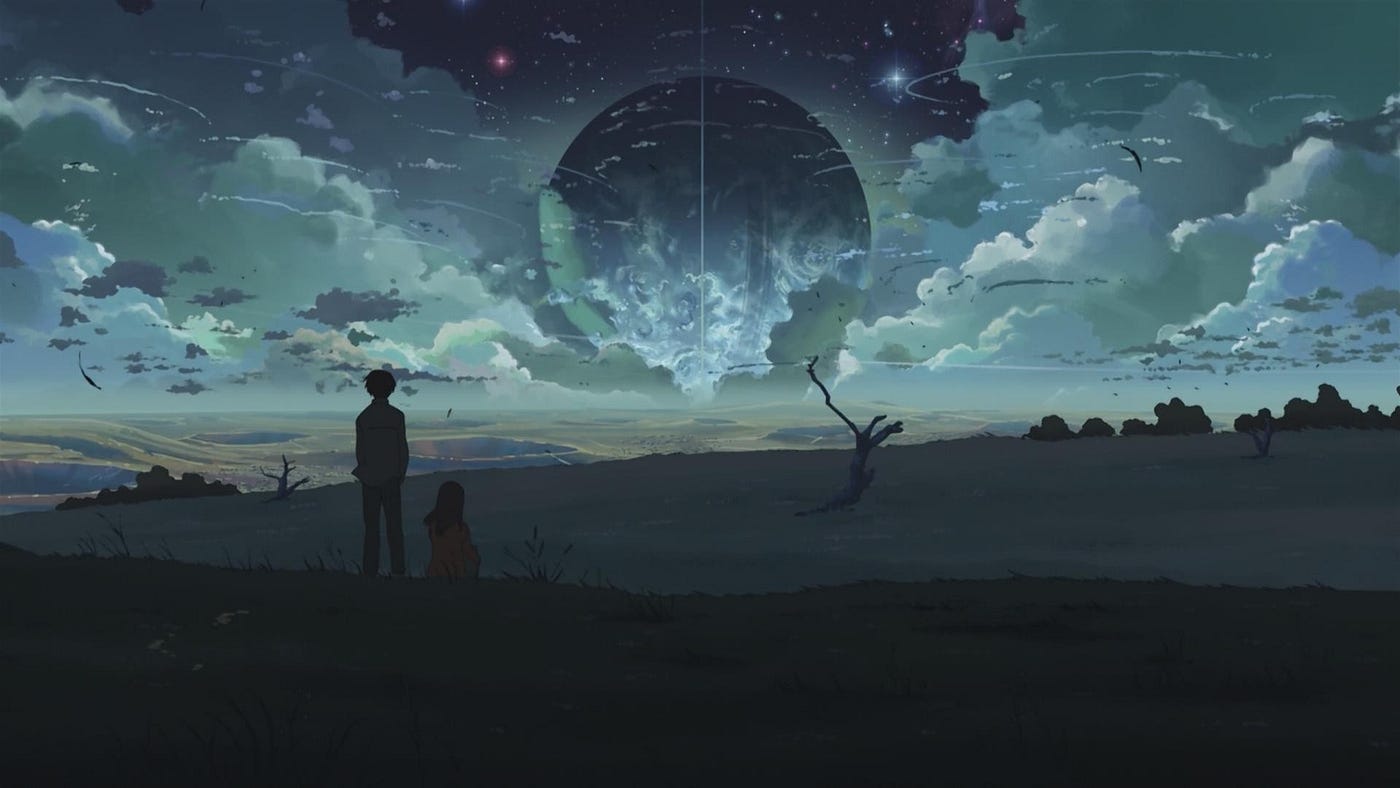
“Reality is brimming over with beautiful things, scintillating feelings. How many of them have I been missing? - Takaki Tohno, 5 Centimeters per Second

Maybe airports are designed to be transient in their experiences. They are banal, but they serve the function of getting us from point A to point B, after all. But my experience has been anything but transient. The subversion of the place I once expected nothing but predictability and formlessness, a means to an end, lent such a powerful message in defining what it truly means to be human. And it all started with losing something so simple, yet valuable. We will all experience those losses, but we have to come to terms with them, for like everything else, those absences are not permanent, and they don’t define us. We must embrace this transience so that we can fly and take hold of new things in life.
(This is not an elaborately written justification for me losing my passport, by the way. I am never putting any of my belongings in the pocket of the airplane seat in front of me ever again).
One of the funniest, most memorable moments of this trip was when I received a call from airport security at LaGuardia airport at 7 in the morning:
“How are you doing today?”
”I’m doing fine, how are you?”
”You can’t be doing fine, I have your passport with me!”
Wow! Such a beautiful post. Flowing and transcendent in how it makes me feel for you in a visceral way whilst reading it from my bed. 😭🌟🌟🌟