
On Progress
Don't cry. You're perfect.

***Spoilers for Arcane Season 2 are below!***
For those who know me, I’m known for being inevitably and rather un-fashionably late in everything I do. I show up to my classes twenty minutes after the lecture begins and am usually the last one to arrive at events and social gatherings. I even submitted my college application to the University of Pennsylvania with 7 minutes to spare (my friends still haven’t let me hear the end of that one).
So it makes sense that I would be late to finish season two of Arcane, almost three months after its release. But to be honest, I’m really glad I took the time to enjoy it. The second season is a marked departure from the themes of class struggle, inequality, and oppression that were emblematic in the first. But I thought the motifs explored this time around were just as compelling, if not a welcome contrast that injects a bit of much-needed novelty into the series. And I think there’s much to be lauded for the show’s seven Annie Awards-winning technical elements. From its upbeat, rock n’ roll soundtrack (including an Eason Chan feature, one of my favourite Mandopop singers) to the kaleidoscopic colour palettes of Zaun and Piltover, the show was a fast-paced, heart-wrenching masterpiece.
However, what really left an impression was the social implications of one idea: progress. The word progress has a plethora of connotations, most of them positive. The progressive movement, writ large, represents continuous improvement and advancement, especially for civil and human rights. Humanity has dreamed, innovated, and exalted constantly of its technological progress: live-saving medicines, powerful metropolis-building machines, and revolutionary artificial intelligence. Yet the apocalyptic realm of Arcane and the precarious allure of the Hexcore subverts this idealism in a rather poignant and nuanced way.
As a pretty big science fiction fan, I’ve consumed many other dystopian media and literature since I was young. Apart from pop culture references we all know like Orwell’s 1984, my childhood was occupied with novels like Huxley’s Brave New World, Atwood’s The Handmaid’s Tale, and Suzanne Collins’s The Hunger Games. These stories warn of the same morose, desolate future where some faceless, evil government weaponizes technology to take over society. Add in some brutal repression of minorities and dissenting voices and you’ve got yourself a formula for a 2000s young adult bestseller.
To be clear, I think the messages in these stories are important: society’s modern-day Frankenstein is technology, and humans have tried for millennia to manipulate it to ascend to god-like status. To some extent, we’ve succeeded in erecting flourishing cities, expanding our population to all-time highs, and extending our lives through modern treatments. At the same time, we’ve built weapons of mass destruction, bioengineered ourselves through genetic editing, and devoted billions of dollars to conquer death itself through the ever-elusive panacea of immortality. At what point do you draw the line between ameliorating our quality of life, and destroying life itself? Much like the story of Prometheus, our attempts to triumph over the natural order are like playing with (literal) fire. We’ve seen shades of dystopia already start to unfurl the fabric of idealistic promises weaved by our technological overlords.1
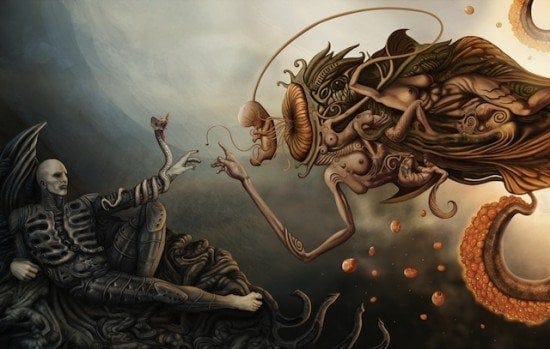
What truly sets Arcane apart from these traditional caricatures of technological dystopia is how the show represents the corruption of power from a more microscopic perspective. Viktor tries to harness the power of Hextech to create a utopia and leads a crusade of Hextech-imbued Zaunites to establish his vision onto the rest of the world. Singed creates Shimmer in an attempt to save the person he loves the most. Caitlyn represents the progressive arm of justice and the well-intentioned efforts to protect Piltover’s citizens using mighty Hextech-crafted weapons to arrest the treasonous rebels.
These aren’t faceless, top-down bureaucratic institutions or governments like the Capitol or Gilead who, with clearly perverse incentives, weaponize technology or the social contract. That’s why I think the show diverges from the typical dystopian formula.
The show excels at taking you on a journey with its characters, highlighting their flaws, triumphs, and moments of humanity (or inhumanity). It isn’t a cookie-cutter story about heroes and villains like Katniss leading the rebellion to overthrow the corrupt President Snow. It’s a complex tale of individual lives, each with their own stories and struggles, thrust against their will into an arena of brutal, internecine, technological warfare that leaves no one unscathed.
Furthermore, the story humanizes the perpetrators of technological abuse by developing them with their individual stories. We watch as characters, each with their selfish intentions, fall prey, one way or another, to the self-destructive nature of the Hexcore. And that, I believe, illustrates the inevitable, deadly consequences technology has on society, no matter who wields it. For as long as we are flawed, whether due to our ambition, our hubris, or our inexperience, we will become the products of our own undoing.
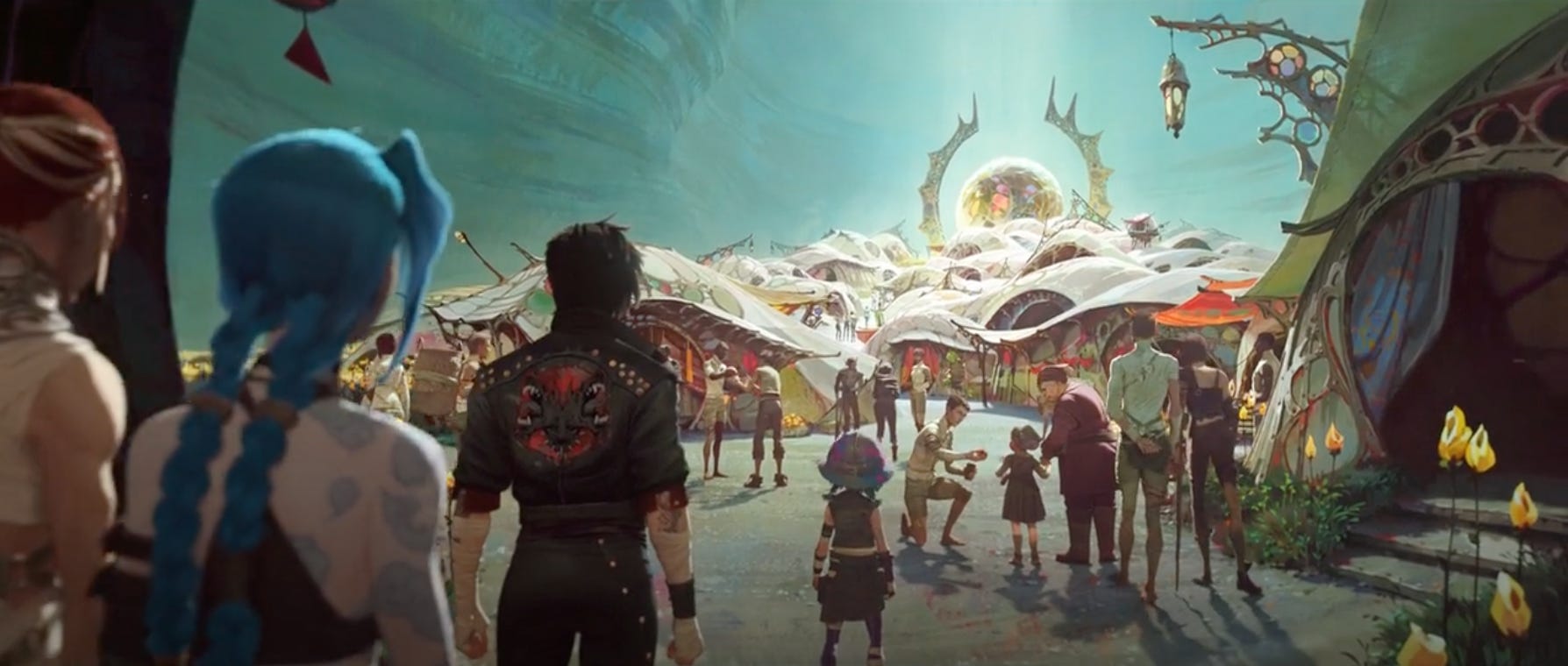
But leaving the incisive societal commentary behind, I think the personal stories behind each character help portray the theme of progress on a more intimate level. And here’s where I think Arcane really shines: the depiction of its cast proves it’s more than just a well-animated series with a lot of fireworks or a soapbox for a critique of modernity.
Growth and progress, especially in the age of social media, where we’ve become increasingly conditioned to be self-critical and perfectionist, come from self-forgiveness. To mature as a person means leaving the past that haunted you, acknowledging and working to rectify your former mistakes, and unshackling yourself from your worries, fears, and insecurities. This is the second interpretation of progress—one that has nothing to do with the capacity of technology but everything to do with the capacity of us to love ourselves.
Even amidst the ferocious intra-city conflict waged between Piltover and Zaun, we see the members of the cast slowly discover their own paths to finding this self-love and emotional maturity.
Jinx is perhaps the biggest example of growth. From her self-destructive character arc in the first season to her reconciliation with Vi and the motherly, nurturing care she provides for Isha in the undercity in the second season, we see her start to overcome her demons through the power of love. Her hero’s journey culminates in her joining forces with Ekko to save Vi and Caitlyn during the final fight against Ambessa’s forces. At the end of the season, we see her make the ultimate sacrifice — tragically blowing herself up to save Vi from a feral Warwick.
But Jinx isn’t the only one who’s come a long way. Our other protagonist, Vi, doesn’t seem, at least on the surface, as broken as Jinx. But we could see how Piltover’s brutal, indiscriminate warfare scarred her mentally: she felt like she could never truly trust anyone, especially Caitlyn. However, perhaps it is her reunification with Jinx; perhaps the flashbacks when she first sees a glimpse of Vander in Warwick; whatever inspires her to rediscover that feeling of love, it allows her to overcome her resentment and distrust of Piltover.
In some way, I empathize with Vi much more despite her development as a character being less overt than Jinx. I think Vi’s struggles represent what so many of us have experienced: silent suffering. She is honest, kind, true to herself, and conducts herself with integrity. Yet, the universe is cruel to her and takes so much away. She is the perfect personification of a bittersweet ending: having lost so much (including the person she first starts the entire show with), but maintains her tenacious spirit despite it all, holding onto the love and hope the future holds.
Finally, I want to talk about Ekko in Episode 7 (my favourite episode). There’s something hauntingly nostalgic about his travel to an alternate universe into a world where Jinx is still Powder, where all the characters who died in season one were still alive. Yet the most wretchedly sad part of the episode is when Ekko decides to leave Powder behind to save his friends back in the current timeline. He understands the greater mission he must embark on, and while he’s scared, deep down he knows what all of us should realize: that love endures beyond time and space.
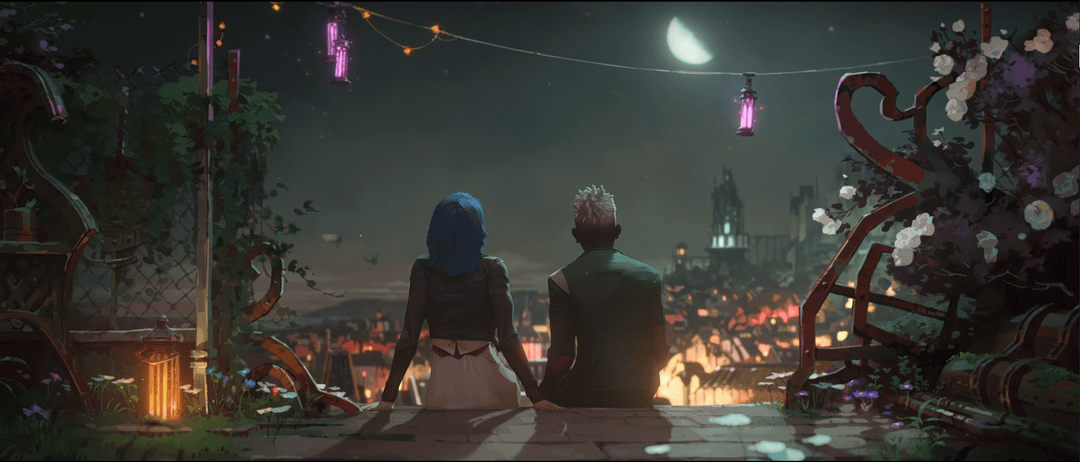
What do I make of all of this? For me, it’s the realization that fulfilment through love can take many forms. We can love our siblings, our family, our friends, our teachers, our mentors, and most importantly, ourselves.
It’s easy to lose sight of the forest for the trees. We get so caught up tunnel-visioning on specific ideals of love that those in our society glorify and extol. But Arcane serves as a thought-provoking counterbalance to those ideals. Romantic love is sparse and ephemeral, easily lost at any moment in time. Even our friends and family can be taken away from us in the blink of an eye. So what truly makes life worth living, if everything we love will eventually come to an end?
We must leave behind these mistaken, toxic preconceptions of love, to love the process of getting through life itself. When I teamed up with my old high school debate partner to attend a university competition again for the first time in four years, I didn’t set myself up for any grand expectations of victory or validation. To enjoy the activities you love again is to leave behind the fear of failure. Surprisingly, it was one of the best times I had. Even if we didn’t make the tournament’s grand finals, I would’ve been happy with the fact that I could have fun competing, making new friends, and going out to restaurants and bars with my teammates.
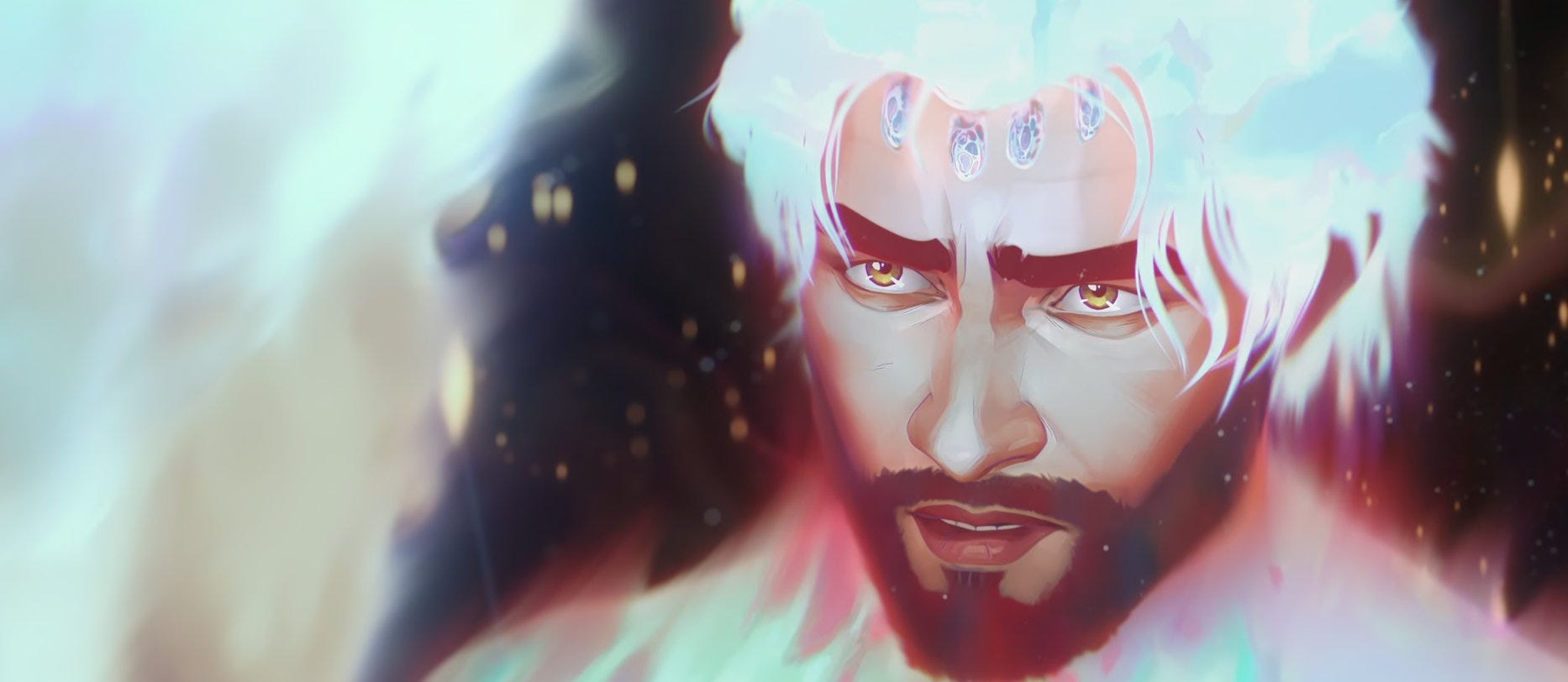
As Goethe once wrote, “None are more hopelessly enslaved than those who falsely believe they are free.” What does true freedom look like? Perfection? A complete optimization of the human condition?
Perhaps the only way we can truly be free from these desires is to unconditionally embrace our flaws. If unfettered technological advancement is the devil on our shoulders, Arcane teaches us the importance of resisting this temptation. On an interpersonal level, if self-criticism and hyper-fixation on the past chain us to our worst memories, Arcane reminds us to look within ourselves to love and cherish what we already have.
See ethics of AI alignment, data privacy, technological surveillance, social media algorithms, and the environmental exploitation caused by mining for rare earth minerals, to name just a few.