
On Perfectionism
I want to give you more but not everything. You don't need everything.

The night breeze howls in the distance with its siren-like call, daring me to stay awake. The stars twinkle with a menacing glint, as if proclaiming this sacred realm is one far from which conscious beings should dwell in. The moon’s beams seep through my blinds, creeping in, illuminating my flaws and vulnerabilities, like a patient on the operating table. Everything is still, except for me and my cacophony of thoughts.
I have a turbulent, inescapable sense of urgency to fix everything that’s wrong. Constantly in a race against time to vault over the ever-growing hurdles the divine makers have set for me. And there’s nothing that fuels me more than my inexplicable yearning to believe that I can, and must do everything.
But what more is there to do? I’m surrounded by the most loving, caring, loyal friends and family. I’ve made the most of cherishing these experiences. I’ve worked hard enough to have the chance to study at one of the nation’s most prestigious universities, working towards the passion I’ve had since a child.
And though I have all these puzzle pieces at my fingertips, I still can’t come to terms with how to fit them together. My faultless, flawless picture is incomplete without more pieces. My obsession with constructing a perfect world knows no bounds. It’s not enough that I am good, because nothing can ever be good enough for me.
I am sick of the chase but I'm stupid in love
And there's nothing I can do
Two months ago, I asked my friends how to start my own Substack. Their answers were reasonable and straightforward: don’t think, just write. But that was harder than I thought. Instead of clicking "new post” like any normal human and pouring my deepest, darkest secrets out into the public domain, I retreated into my familiar sanctuary of procrastination (in hopes of conceiving the “ideal” starting blog post).
But the catalyst that ended up finally inspiring me to revisit to what I once saw as an unimportant afterthought — confronting my perfectionism — came after watching The Boy and the Heron, Hayao Miyazaki’s self-proclaimed final film. It was a beautiful piece, leaving me with more questions than answers. And the one thing, above all, that consumed me from the moment I left the theatre was Miyazaki’s choice for the Japanese title: How Do You Live?
It’s a powerful question, and arguably the most quintessential one. And the movie answers this in such a poignant, Ghibli-esque way — for the main character, Mahito, he overcomes his grief for his dead mother through a coming-of-age journey intermingled with supernatural and fantasy elements that transcend life and death, time and space itself.
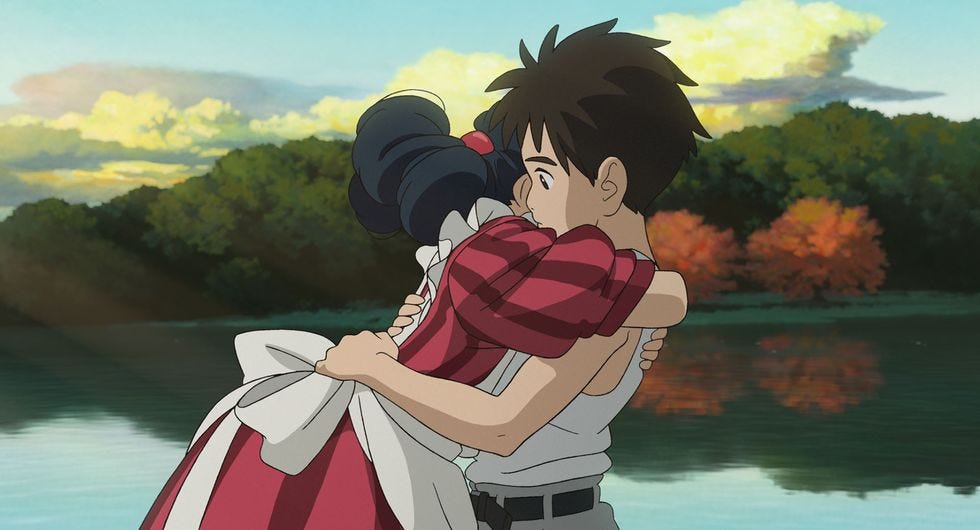
Yet, I think the film’s answer only scratches the surface of the metaphorical iceberg of life. For most of us, death is only a blip in our massive canvas of experiences (even as we slowly, interminably crawl closer to that very end). How we choose to live, while alive, is a hauntingly terrifying question, perhaps accentuated even more by the thought of what comes after — or the lack thereof.
For if there is no afterlife, no continuation, no “reset button” for our existence, doesn’t that make our choices in this life ever more significant?
This has always bothered me: how much can I really give to others, to myself, to the universe, if I’m never capable enough, not good enough, not experienced enough? How can I be proud of what I’ve done, what I’ve accomplished, when those around me have done so much more?
Maybe that’s just who I am. Maybe it’s a fruitless endeavor to hope I could ever eradicate my deep-rooted instinct to compare myself to others. But that is precisely why I, nor anyone else, could ever aspire to be perfect. Yet, even in light of this, I still think I understand how Miyazaki answers how do you live? on a deeper level. There’s three key respects by which I think he does this:
First, through the depiction of unconditional love. Despite all of Mahito’s shortcomings, like his self-inflicted, unsightly scar, or his misplaced anger at his father’s new wife, Natsuko (crazy how it’s his late mother’s sister), the people around him sympathize, understand, and forgive.
When Mahito’s father mistakenly assumes he’s been turned into a parakeet, he jumps straight into action to avenge his son, comically slashing at the birds with his katana. Kiriko (one of Natsuko’s maids), in her alternate, more powerful form, acts as a guardian angel, saving and accompanying Mahito in his times of need. And even Natsuko, who Mahito despises in the beginning, eventually embraces him with open arms once he re-emerges from the underworld. We actually get very little character development on each these supporting characters. But perhaps that was intentional to underscore Miyazaki’s message.
I think this is a really important lesson in what defines a successful life. It’s knowing that the vast majority of people recognize they aren’t perfect either, and will never judge you in the way you think for your flaws. The more I reflect on the teachers, coaches, friends, and mentors who have supported me, and who still stand by my side, I realize there’s only one person who hasn’t been willing to offer that same level of love to me. Myself. So if we can feel loved, and make others feel loved in this world, without being perfect, then that is enough.
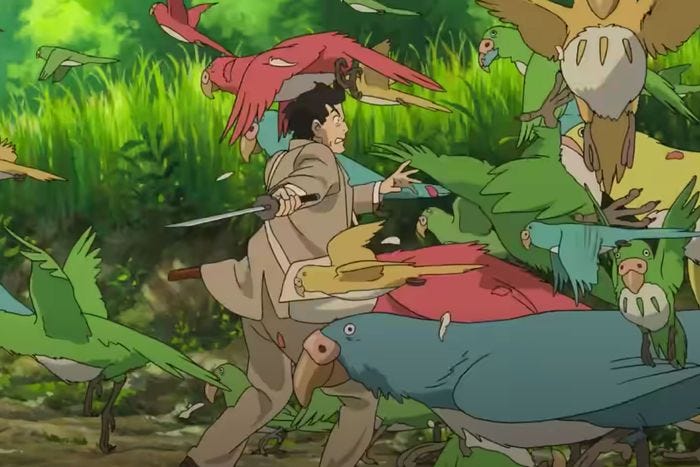
Second, through the whimsical nature by which Miyazaki portrays Mahito’s journey in overcoming his grief. While the structure of the movie is much more unorthodox than other Ghibli films, constantly thrusting you from one fantastical setting to the next, I think this works wonderfully. The subversion of such serious themes like life and death is juxtaposed with idyllic landscapes of the seaside, mountains, and islands, and a whole host of magical creatures including soul-eating pelicans, knife-brandishing andromorphic parakeets (that oddly look like the Duolingo owl from those memes), and of course, these little guys.
It all lends an absurd geniality to the whole plot that underpins how Mahito, despite being a young child grasping with the brutal and irreconcilable finality of losing his mother, is able to not just escape, but grow through his pain. Notably, it’s through this kaleidoscopic landscape, that Mahito is able to reconnect with his mother (albeit in a different form). Maybe, even if we can’t have everything we’d like in our material world, our imagination can carry us past those limits.
Somewhere inside all of us, I’m convinced we all share Miyazaki’s whimsy and creativity. While we may not be able to be transported into a parallel world the way Mahito was, I think we all can aspire to live a life unshackled by the internal thoughts that haunt us, and to instead focus on seeking out and experiencing the sublime.
Watching the sunrise at daybreak, having your first kiss, or finishing a breathtaking musical composition. I can’t begin to name the wonders of nature, art, culture, and the other marvels of the human experience out there. They’re temporary and fleeting, unlike our pursuit of being the perfect life. But I believe it’s because of their transience, and their rarity, that makes them far more worth going after.
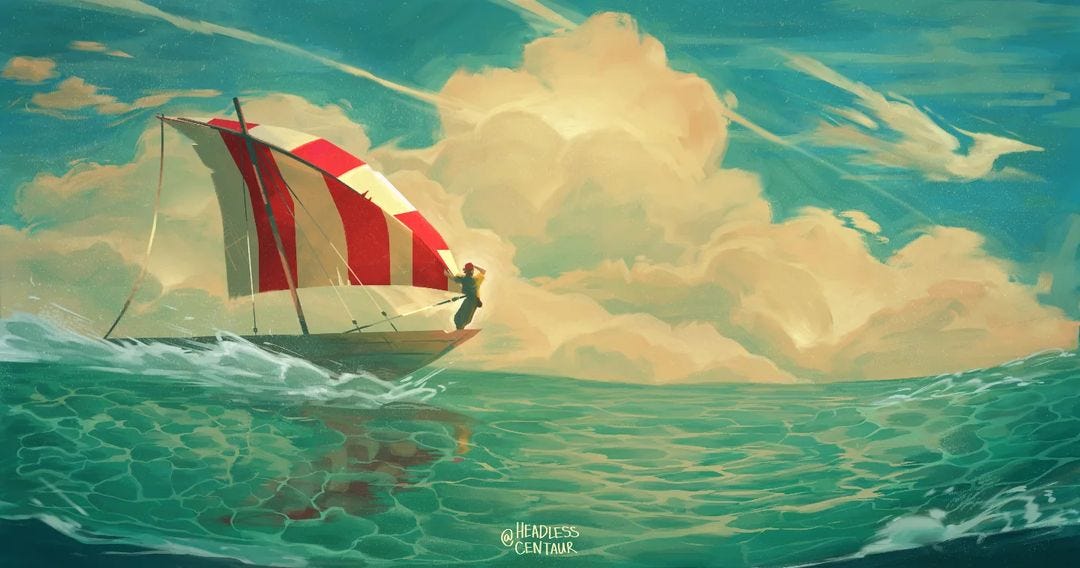
Third, through what I think is the most courageous action of the whole movie: Mahito’s decision in the end to return to the reality he departed from. He rejects his Great Uncle’s offer to replace his creation with new building blocks of the universe. Then, as the world crumbles before him, faced with an infinitude of potential timelines represented, he inexplicably chooses to re-open door 132 — the figurative gateway leading back to his original world.
I can’t lie. Watching this scene, and playing it back in my mind, I would have opened any other door in a heartbeat. If I could have all the people I’ve lost or left, or change the qualities that I hated the most about myself, then surely, my life would be happier, more whole, more complete.
And yet, I think Mahito’s choice was the only one that made sense, and demonstrated his maturity in coming to terms with his imperfect life. He couldn’t keep replacing the blocks in the underworld — for living in such a delusion would only be forever temporary. But what about going through another door and changing the past? When Himi (Mahito’s mother) says, “I’m not afraid of fire”, returning to her own door (timeline) so that Mahito can be born, I think Mahito understood why he couldn’t follow her.
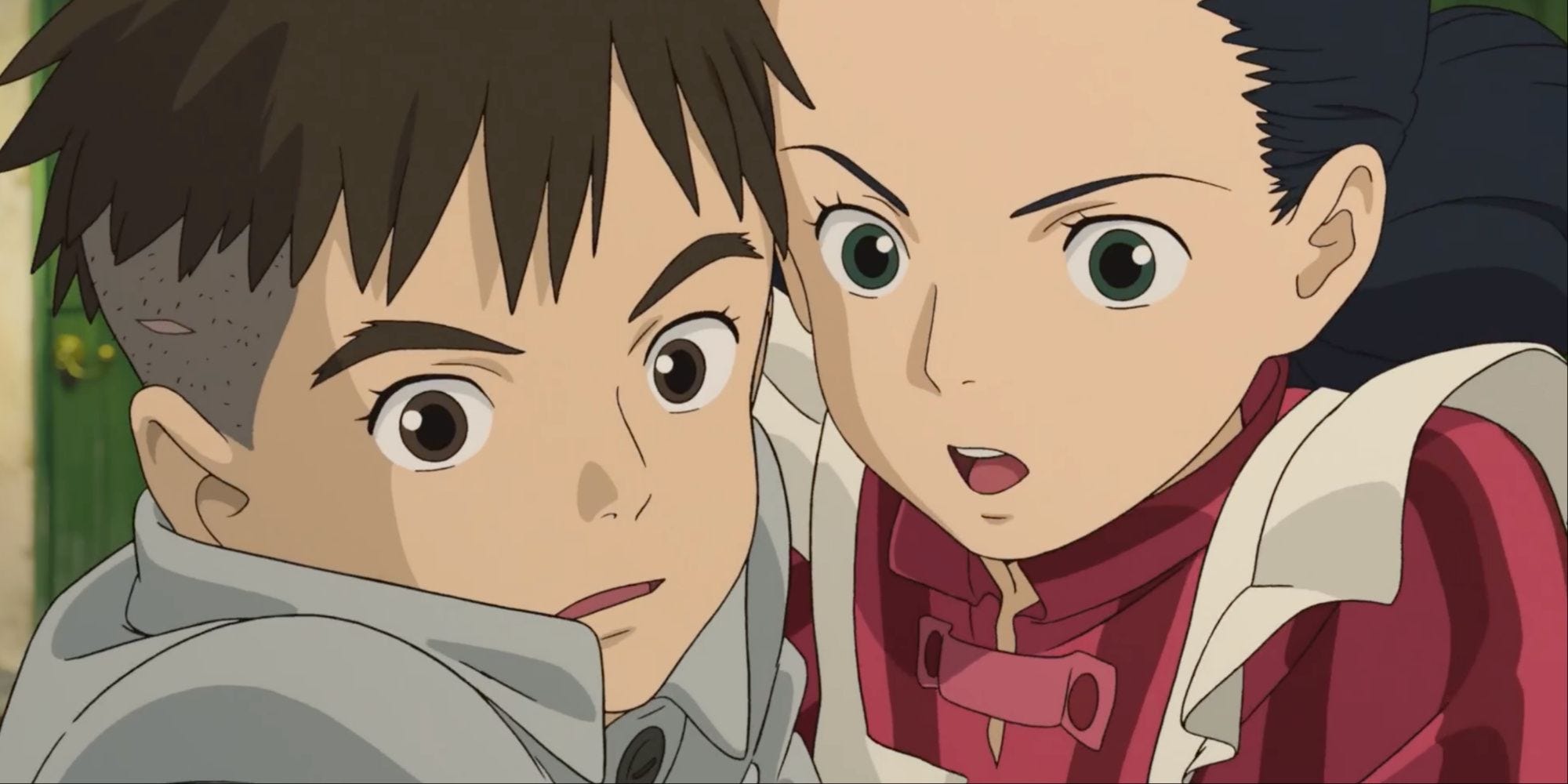
I can’t go back and undo the decisions I made that brought me to where I am today, for better or for worse. I can’t take back all those late nights I spent studying instead of making the most of my time with my friends and loved ones. I don’t get a do-over on the times where I stayed silent, fearful of the future, instead of telling those who I liked my true feelings.
Mahito didn’t follow his mother back into her timeline because he knew she needed to give up her life so that he could live on. Just like for all of us, this is emblematic of growing as people. Perhaps this growth will come at a great cost; perhaps it will be mired with pain and tribulations, mentally, physically, and emotionally; and perhaps, like a budding plant, we won’t be able to see its progress immediately.
But for every mistake, every missed opportunity, I’d like to think I’ve become a better person. I’ve found the courage to show my love to those who matter most to me. I’ve made time in my day to seek out those moments of transcendence, of breath-taking wonder. I’m still trying to own up to my flaws, to embark on that continuous journey of learning. Will this be in the wake of attaining a perfect life? Absolutely not. But I hope it will allow me to love myself for who I was, and who I am today.
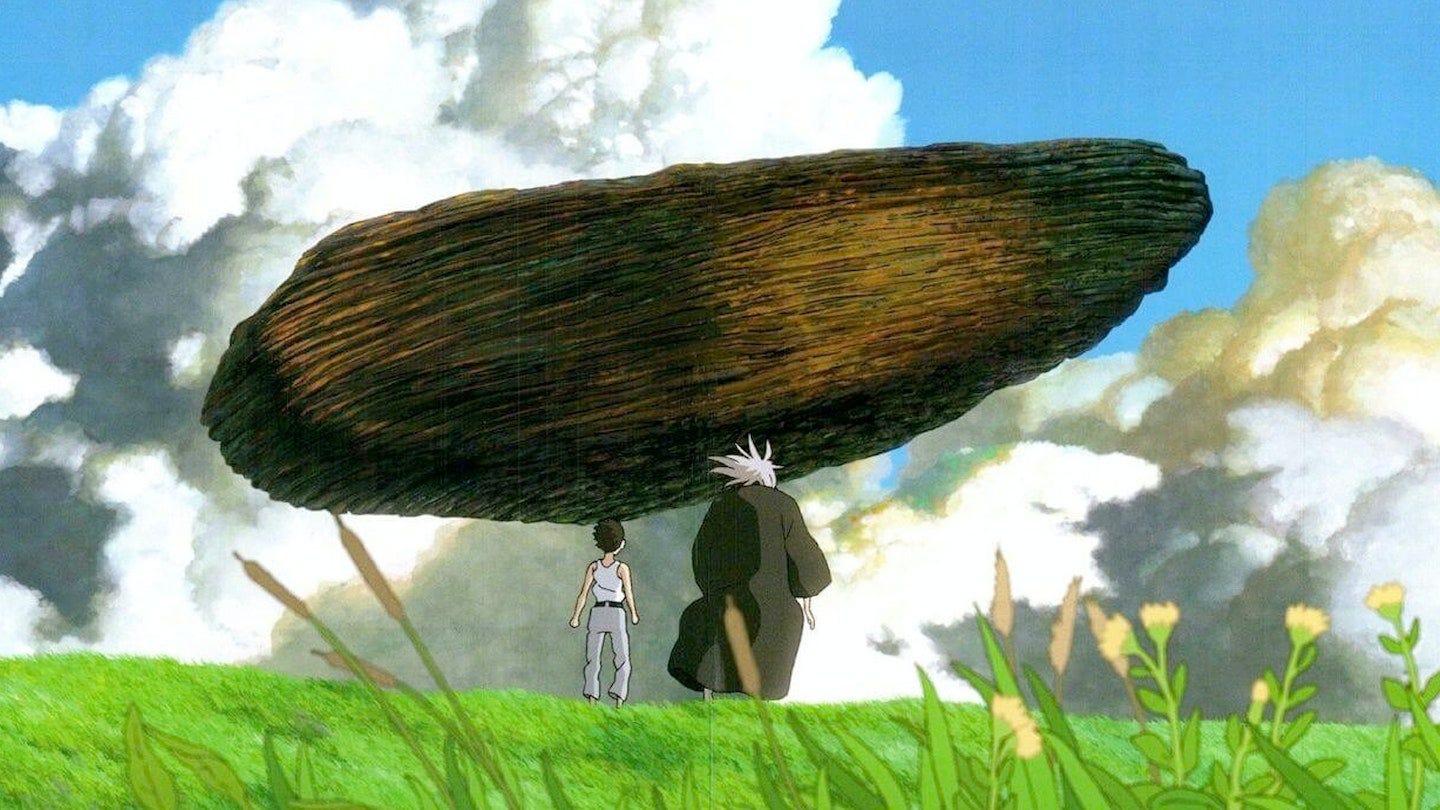
This was my world. It was beautiful and messy and tragic and silly. It can not last. Now go make your own.
So, how do you live? I don’t think there is a satisfying, all-encompassing, perfect answer to this. But so far, the best solution I can offer myself is simple: to be in search of love, the sublime, and self-improvement. If I can wake up every single day reaching ever closer to those three things, then that is enough.
I don’t need everything. And that’s okay.
❤️❤️❤️ power to Miyazaki and his beautiful Studio Ghibli films. Also, beautiful piece by the way.